By Amar Patel | Principal, Cost Segregation
What if your rental property could save tens of thousands in taxes this year? That’s the opportunity created when 100% bonus depreciation is combined with cost segregation.
Cost segregation increases cash flow for reserves, renovations, or your next investment. With CostSegregation.com, it only takes 15 minutes to unlock those benefits.
Key Takeaways
- 100% bonus depreciation allows eligible property costs to be deducted in the same year the assets are placed in service, subject to applicable rules.
- Cost segregation identifies shorter-life components that may qualify, potentially creating substantial first-year deductions.
- CostSegregation.com helps smaller-property investors estimate the opportunity for free and complete an expert-backed study in 15 minutes or less.
What Is Bonus Depreciation?
Most residential rental buildings are depreciated over 27.5 years, and commercial buildings generally are depreciated over 39 years. Bonus depreciation, however, lets real estate investors take the full tax deductions of certain qualifying assets much sooner.
Under current federal law, 100% bonus depreciation generally applies to eligible property acquired after January 19, 2025, and placed in service after that date. Building structures generally do not qualify, but eligible shorter-life assets may. For more information, IRS Publication 946 breaks down the rules in entirety.
How Does 100% Bonus Depreciation Increase Cash Flow?
Imagine a cost segregation study identifies $100,000 of eligible assets in a rental property. If those assets qualify for 100% bonus depreciation, the investor may deduct that full $100,000 in the first year.
At an illustrative 30% tax rate, a fully usable $100,000 deduction could represent approximately $30,000 in tax savings. For more information on tax deductions versus tax savings, please read our full article on that topic.
How Does Cost Segregation Unlock the Opportunity?
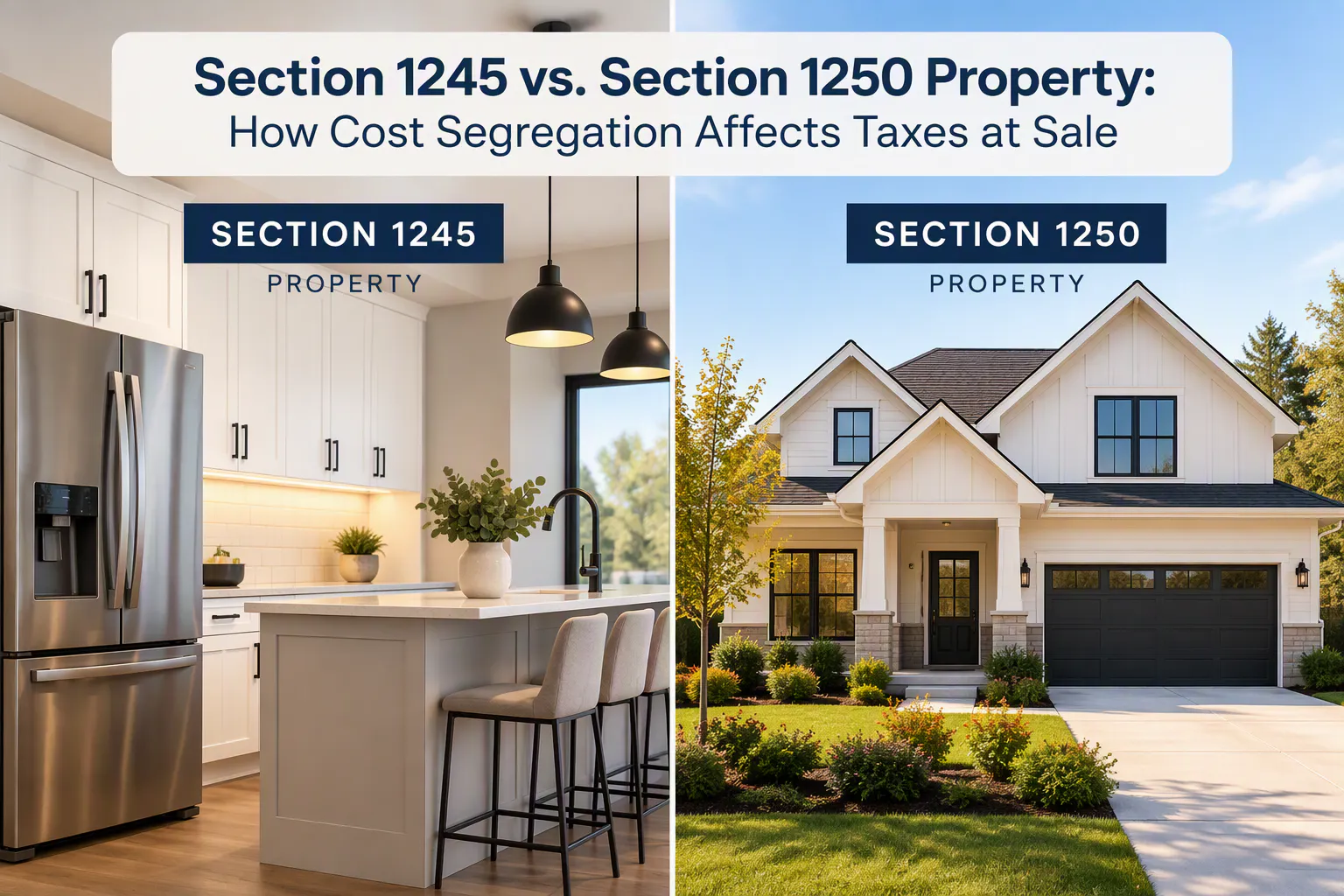
Cost segregation, or cost seg, identifies qualifying components such as appliances, carpeting, furniture, certain specialty systems, parking areas, and landscaping that may follow 5-, 7-, or 15-year depreciation schedules.
According to CostSegregation.com’s cost segregation experts, property-specific classifications, not blanket percentages, are essential to a quality study. In short, accelerated depreciation cost segregation identifies tax deductions that create cash flow for reserves, renovations, or future investments.
See What Your Property Could Save
CostSegregation.com is the top-rated cost segregation software. Built and backed by KBKG, its methodology draws on the 300+ years of experience from former IRS engineers and Certified Cost Segregation Professionals, with detailed depreciation schedules and audit support included.
For investment properties with up to $1.5 million in building basis, excluding land, start with the free CostSegregation.com calculator to estimate your first-year deductions and tax savings. Then, you can use CostSegregation.com’s software completely free of charge; users only pay if they’re happy with the results.
Frequently Asked Questions
Can Short-Term Rentals Qualify for 100% Bonus Depreciation?
Yes. Eligible furnishings, appliances, and improvements may qualify. A CPA should separately assess whether the investor can currently use the deductions.
Does Bonus Depreciation Factor into the Short-Term Rental Loophole?
Yes. With 100% bonus depreciation restored under the One Big Beautiful Bill Act for qualifying property acquired after January 19, 2025, the opportunity to accelerate first-year deductions is stronger than it has been in several years. Read further to view the short-term rental loophole explained.
Can Commercial Real Estate Investors Use CostSegregation.com?
Yes, CostSegregation.com works for both residential and commercial investment properties with up to $1.5m in building basis, excluding land. For a better idea of how to calculate land vs. building allocation, read this guide written by one of our principals.
About the Author
Amar Patel spent over 15 years at a Big Four accounting firm, focusing on various specialty tax products including Cost Recovery Solutions and Research & Development Tax Credits. With more than 20 years of practice, Amar brings a wealth of cost segregation experience and expertise to our team.